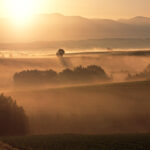
Habitats of the Guejito

Accurately mapping biology and habitat types on 22,000 acres is a big job. I currently have aerial images and two sources of data available, the SD County vegetation survey and the 1973 State Parks plant communities map. While quite useful, County data is gross mapping designed to give overall habitat types on a countywide scale and not reliable for any specific property. The State Parks map uses broader categories and perhaps gives a better overall handle on the Guejito's general character which I will attempt to describe.

1973 Guejito Vegetation map from State Parks feasibility study

Pine Mountain, overlooking the San Luis Rey River valley at 4200 feet, is the heart of the Rancho Guejito's northern highlands . At it's top there are stands of Jeffery Pine. Heading down its slopes you quickly enter black, coast live, and Engelmann oak woodlands. Black oaks reside at higher elevations but the rare Engelmann oak dominates the hillsides forming "perhaps the finest stand of Engelmann Oaks found anywhere." Interspersed amongst the oaks are mountain valleys and glades of native grasslands thought to contain rare types. Often these sights are set off by "spectacular rock outcrops" jutting out of the landscape. Chaparral becomes more common as you move further on down and as the tributaries of Guejito Creek gather together broad expanses of mild grasslands come into view and recede into the distance. The various branches of Guejito Creek emerge from the hills and wander across the broad meadows coming together to form the Guejito headwaters basin on deep loamy soil.

Guejito Englemann Oak coverage map

As we follow Guejito Creek oak hills on the east diminish but continue and break out occasionally into patches of chaparral. Surrounding the creek are wide open grasslands interspersed with wetlands in the central basin. Over the oak and chaparral covered hills to the east separate grassland is forming above Boden Canyon. The creek waters are gathered together by a narrow opening in the hills as we leave the most northern pasture. We are now in the central reaches of the ranch where the eastern and western grasslands are separated by smaller hills dotted with boulders and oaks. Coast Live Oak is more common here edging into the Engelmann’s turf and sporadically intruding into the grasslands where the habitat suits them forming a harmonious mixture of the minor and the mighty. Never having been subject to the plow the meadowlands retain "extensive residual native grasses" and "wildflowers blanket the landscape in the spring".

San Diego County DPLU Vegetation mapping for Rancho Guejito

Heading into the southern reaches the western meadow gives way to hills, sycamores and oak covered riparian corridors where water from the eastern grasslands joins the creek in a deep wetland before cascading into San Pasqual valley. The eastern pasture continues on until it abruptly ends as if trapped on top of the foothill region. Past this line the chaparral and scrub envelop the landscape over which we can see the San Dieguito River. The hills quickly steepen into a mountainside and we drop out of the Guejito into the farms of the San Pasqual valley enchanted by our journey.

Alas, I am unable to make this trek and have only my data, yet how much better to capture the genius of the place than mere charts and maps.

Kit Wilson